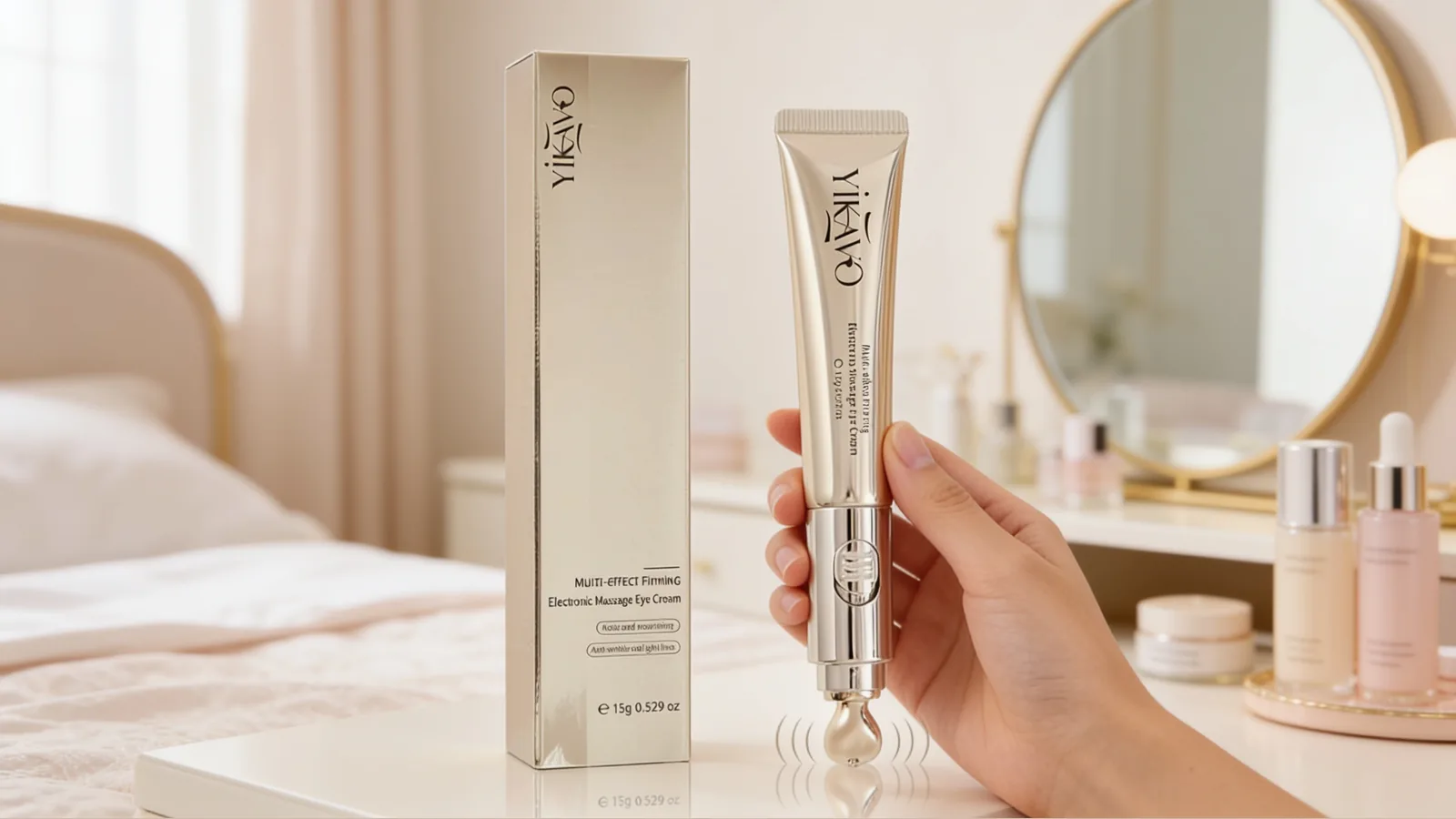
what should gentle micro vibration feel like in an eye cream applicator
At its best, a gentle micro-vibration eye cream applicator should feel subtle rather than sharp: the metal head should feel cool, the cream should glide across the skin, and the vibration should be a light local sensation that does not force you to press harder. If you cannot separate those three sensations, or the unit feels completely dead compared with the page instructions, document what you observed and contact the seller before you decide to keep it.
Separate the cool metal contact, product glide and micro-vibration into three different sensations
Start by treating the applicator as three experiences happening together, not one. The cooling metal contact is the touch of the head on skin. The glide is the way the cream moves as you sweep it outward. The micro-vibration is the subtle movement you feel through the head, not a promise of skincare results. When people say an applicator feels "off", the problem is often that one of those sensations is missing, muddled, or happening only intermittently.
If you are checking a first use, note each sensation separately. That gives you a cleaner record than simply saying it felt weak or strong.
Explain what gentle can and cannot establish without a published intensity specification
The word gentle tells you the brand is describing a mild experience, but it does not give you a measurable intensity, sound level, speed, or performance threshold. It can mean subtle; it cannot tell you whether the product is underperforming. It also cannot prove that the device is defective. Public discussions about eye wands and under-eye massagers show that people often struggle with the same uncertainty: is the feeling intentionally light, or is something wrong?
That is why the safest approach is to compare the applicator with the wording on the page, not with an imagined standard.
Follow the current page instruction to turn on the massager without inventing the control or power system
Use only the instruction the product page gives: turn on the massager, then glide gently from the inner corner outward until the cream is absorbed. Do not guess where the control is, how the power system works, or whether a reset is needed. If the activation step is unclear from the current listing or packaging, stop short of trial-and-error fixes and check the instructions again.
This matters because a device can seem "not working" when the issue is actually a missed step, while still avoiding any need to invent charging, battery or repair assumptions.
Compare the unit only with its own first-use state and disclosed instructions, not with unrelated devices
The cleanest comparison is between what you observed on first use and what the product says it should do. Do not compare it with a different brand, a facial massager, or any other vibrating tool. Another device may feel louder, stronger or more obvious, but that tells you nothing reliable about this one.
Instead, ask a narrower question: did this same unit behave consistently with the instructions you were given? If its feel changed later, note when that change appeared and what you had done beforehand, without assuming the reason.
Document what is observable without opening, charging, wetting, dismantling or repairing the product
Keep your notes limited to what you can see and feel from the outside. That gives you useful evidence without creating avoidable damage or confusion.
| Check | What to note |
|---|---|
| First-use feel | Was the metal head cool, did the cream glide, and could you detect a subtle vibration? |
| Instruction followed | Did you use the massager exactly as the current page describes? |
| External condition | Any visible damage, missing parts, leaks, marks or packaging issues |
| Observed state | What you could confirm without opening, charging, wetting, dismantling or repairing anything |
That record is more useful than a vague verdict such as "broken" or "fine".
Stop use for discomfort or eye-area warning signs and keep efficacy questions separate
If the applicator causes discomfort, stinging, pain, unusual redness, swelling, or any other eye-area warning sign, stop using it. A gentle vibration should never be something you have to tolerate through irritation. If symptoms are severe or do not settle, use appropriate medical advice rather than trying to judge the product by feel alone.
Also keep the efficacy question separate. Feeling a vibration does not prove the skincare claim, and not feeling much does not automatically mean the item is unsafe. First confirm comfort and basic operation, then ask whether the cream itself is worth keeping.
Use an evidence checklist for contacting the seller or deciding whether to return
The current product page provides a contact route and return information, so it is worth preparing a short factual note before you reach out. Keep it practical and specific.
- Your order number, delivery date and the exact product name.
- A short description of what you felt on first use: cool contact, glide and micro-vibration.
- The exact instruction you followed from the current page.
- Any visible external issue, discomfort, or warning sign you observed.
- A plain request: replacement, advice, or return guidance under the current policy.
If you want to compare your notes against the listing before you contact support, see the current product details.