A Morning Eye Care Routine for Dry, Tired Under-Eyes
A practical morning eye care routine is: cleanse gently, apply a small amount of eye product, follow with facial moisturiser if you use one, then finish daytime skincare with suitable sunscreen.
Let each layer settle before makeup and keep pressure light around the eye contour.
An applicator can make the ritual more controlled, but it does not make an eye cream clinically superior by itself.
The five-step order
- Cleanse without scrubbing. Remove overnight skincare and makeup residue, rinse as directed and pat the face dry. If the eye area is already sore or inflamed, do not try to “polish” the feeling away.
- Use watery facial layers first. If a toner or serum is already part of your routine, follow its label and keep products not intended for the eye area away from the eye itself.
- Add a small amount of eye cream. Dot or glide it around the eye contour rather than onto the waterline. A thin layer is easier to let absorb before concealer.
- Follow with facial moisturiser where needed. This helps keep the routine simple: the eye product serves the eye contour; the moisturiser serves the rest of the face.
- Finish daytime skincare with sunscreen. Choose a product suitable for your skin and follow its directions, taking care around the eyes. Wait for skincare to settle before makeup.
What counts as a useful upgrade
If an ordinary eye cream already keeps your skin comfortable, there is no rule saying you need an electric one. An upgrade is useful only if it solves a real friction point: fingertip application feels messy, you tend to rub too hard, or a built-in tool makes you more consistent without adding several gadgets.
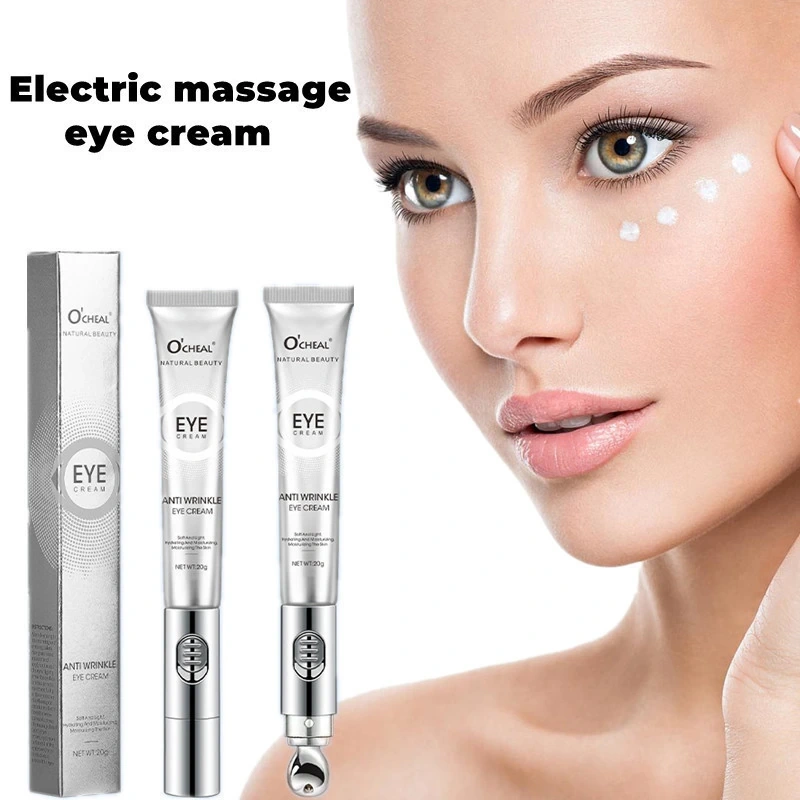
The O'CHEAL 20g Electric Massage Eye Cream costs £23.10 from Yikavo and combines a lightweight formula with a metal applicator and gentle micro-vibration. Its detail page lists niacinamide, pearl powder, hyaluronic acid, glycerin and centella asiatica. Those ingredients make the label more informative, but the page does not publish their concentrations or a finished-product clinical trial.
That distinction matters to the skincare upgrader who wants richer ingredients and a better ritual but does not want to pay for theatre. Ingredient research can support a general reason for including humectants or barrier-supporting ingredients; it cannot prove that every formula containing their names produces the same result.
Keep the routine matched to the concern
Dry-looking fine lines may appear softer when the surface is better moisturised. Morning puffiness has a different set of possible causes, so use the focused guide on how to reduce morning eye puffiness rather than adding more layers. Pigment, shadows and inherited structure will not necessarily respond to hydration.
If the main question is whether the vibration earns its place, read do electric eye creams work? If your skin is reactive, start with the separate instructions on how to use an eye cream applicator and test the formula before bringing it close to the eyes.
Common routine mistakes
- Using a thick layer and then blaming the concealer when it pills.
- Dragging the applicator back and forth because stronger pressure feels more “active”.
- Adding several new products on the same morning, making any irritation difficult to trace.
- Treating dry skin, dark circles, puffy lids and dry-eye symptoms as one cosmetic problem.
- Assuming an ingredient list gives product-level proof without concentration or trial details.
Frequently asked questions
Should eye cream go before or after facial moisturiser?
A simple approach is to apply a small amount of eye product after lighter facial layers and before or alongside moisturiser, following each product label. Consistency and comfort matter more than adding extra steps.
How long should I wait before applying concealer?
There is no universal minute count. Use a thin layer and wait until it no longer feels wet or mobile; too much product is more likely to affect makeup.
Do I need both an eye serum and an eye cream?
Not automatically. Add a second product only for a clear purpose and introduce one change at a time, especially if your skin is sensitive.
Is an electric applicator a necessary skincare upgrade?
No. It may make application feel more controlled or enjoyable, but the electric feature alone does not prove better cosmetic results than a comfortable regular eye cream.
Can this routine treat dry eyes or sore eyelids?
No. Cosmetic eye-contour care is different from treatment of the eye surface or eyelid disease. Ask a pharmacist, optometrist or GP about persistent soreness, discharge or visual symptoms.
Prefer eye cream and applicator in one tube?
View O'CHEAL Eye Cream — £23.10